PROMOTED by


The authors also interpret PRC statements as demonstrating continuity of intentions. Yet, even if one believes that Beijing’s goals are enduring and unchanged, its operational tempo and risk tolerance have risen as its capabilities have grown. The overt clashes with its neighbors, which are seriously overlooked in the article, show this well. Furthermore, the shifting balance of capabilities means that many countries in the region are no longer as sanguine or uninterested as the article posits. Bluntly, armed conflict in the Taiwan Strait—or in any of the PRC’s various outstanding disputes—would shatter the regional status quo and have massive global spillovers.
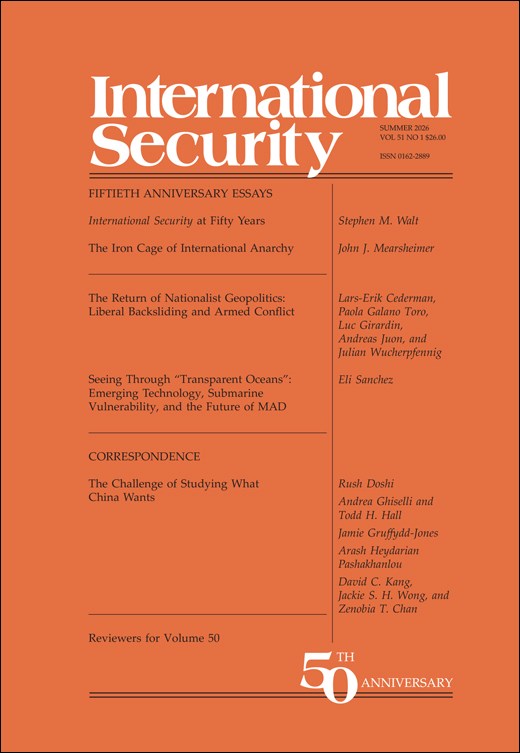
A selection of four letters to the Editors of International Security in response to the widely discussed article “What Does China Want?” by David C. Kang (University of Southern California), Jackie S. H. Wong (University of California, San Diego), and Zenobia T. Chan (University of Southern California), published in the summer 2026 edition of the journal. The second letter, by ChinaMed Head of Research Andrea Ghiselli and Todd H. Hall (University of Oxford), argues that "focusing on frequency can miss crucial pieces of evidence" in particular the term “the United States,” as this approach misses the euphemisms through which Beijing usually attacks the United States. The other three letters are by Rush Doshi (Georgetown University), Jamie Gruffydd-Jones (University of Cambridge), and Arash Heydarian Pashakhanlou (Swedish Defence University). Kang, Wong, and Chan also offer their own reply.


